 +86-13941505597
Nowadays, most tenders from major water utilities specifically mandate the use of NB-IoT network technology, propelling the procurement, installation, and deployment of NB-IoT smart water meters to surpass ten of million of connections. Smart water management is a crucial component of smart city construction. Based on data collected by the perception layer, various application systems are developed utilizing technologies such as cloud computing, artificial intelligence, and edge computing. As a foundational service in water utility applications, remote meter reading has become one of the fastest-growing application sectors in recent years, driven by policy support and NB-IoT technology.
Traditionally, water meter reading has been conducted manually, a method with obvious drawbacks. Manual reading suffers from low efficiency, high labor costs, susceptibility to data entry errors, difficulties in gaining access to homes due to resident security concerns about strangers, and challenges in maintenance and management.
With the advancement of smart water management construction and the development of NB-IoT technology, China's water meter industry is evolving to keep pace, adjusting and transforming towards NB-IoT smart meters and application systems. This marks a transition from traditional mechanical meters to NB-IoT smart meters.
NB-IoT technology is an emerging technology in the IoT field, offering advantages such as supporting massive connections, deep coverage, low power consumption, and low cost. The introduction of NB-IoT has successfully overcome two major obstacles of existing smart meters: high power consumption and poor network communication. It enables intelligent control of remote metering while significantly extending the service life of the water meters.
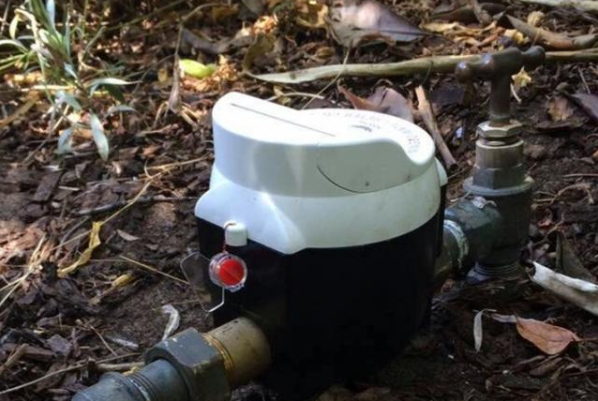
Applying NB-IoT technology to smart water meters offers numerous advantages. Remote centralized reading: NB-IoT smart meters utilize narrowband IoT technology, enabling remote data transmission, eliminating the need for manual meter reading, greatly reducing human errors, and improving data accuracy. Real-time query: With high data collection frequency, NB-IoT smart meters can reflect the user's real-time water usage at home. This information can be viewed anytime, anywhere, offering great convenience. Solving signal coverage issues: The application of NB-IoT technology overcomes the shortcomings of GPRS and CDMA water meters, effectively addressing signal coverage and power consumption problems.
NB-IoT smart meters resolve issues associated with manual reading, such as time consumption, inability to read meters when residents are away, and potential errors during data reading and uploading. This significantly enhances the intelligent management level of water utilities, making the act of "asking to read the meter" a thing of the past.
Nowadays, the requirements for NB-IoT smart meters extend beyond just remote meter reading. They now include functions like monitoring water leakage for residential users.
In many areas, there are requirements to collect water usage data every 30 minutes and report it once daily. This means collecting 48 data points per day, with readings accurate down to the liter. This granularity meets the business needs for meter reading, data analysis, user leakage monitoring, and community DMA analysis.
With NB-IoT being incorporated into the 5G standards, its continuous technological maturation, and the ongoing advancement of smart water management construction, the demand for NB-IoT smart meters is expected to grow substantially, presenting a significant market opportunity.
According to data from Metering.com, the estimated demand for smart water meters in 2020 was approximately 33.87 million units. Currently, smart water meters primarily utilize three technologies: NB-IoT, LoRa, and 2G. Given the advantages and recognition of NB-IoT technology over LoRa, coupled with the accelerating pace of 2G network phase-outs, NB-IoT is poised to become the mainstream product, with its penetration rate expected to increase rapidly.
Phone:+86-13941505597 Add:No. 5, Xingsan Road, Zhenxing District, Dandong, Liaoning Province, China Tel:+86-13941505597 Mail:sales@jinkefa.cn |
|
+86-13941505597 |
 Contacts
 Feedback
 Tel
Tel